%2Ffit-in%2F250x250%2Fguide_websites%2F14539%2Fimages%2F1712862098526fishing1.png&w=1920&q=100)
/users/566ec949-39ef-4631-8919-721b0ba6d3e0/ratecard/striped.png)
%2F300x300%2Fusers%2F566ec949-39ef-4631-8919-721b0ba6d3e0%2Fratecard%2Fstriped.png&w=256&q=75)
%2F300x300%2Fusers%2F566ec949-39ef-4631-8919-721b0ba6d3e0%2Fimages%2Ffishing-adventure-long-island-2275.png&w=256&q=75)
%2F300x300%2Fusers%2F566ec949-39ef-4631-8919-721b0ba6d3e0%2Fimages%2Fangler-fishing-trip-ny-2495.png&w=256&q=75)
%2F300x300%2Fusers%2F566ec949-39ef-4631-8919-721b0ba6d3e0%2Fimages%2Ffishing-new-york-2213.png&w=256&q=75)
%2F300x300%2Fusers%2F566ec949-39ef-4631-8919-721b0ba6d3e0%2Fimages%2Fgreat-fishing-in-ny-2214.png&w=256&q=75)
%2F300x300%2Fusers%2F566ec949-39ef-4631-8919-721b0ba6d3e0%2Fimages%2Fstriped-bass-long-island-fishing-2629.png&w=256&q=75)
%2F300x300%2Fusers%2F566ec949-39ef-4631-8919-721b0ba6d3e0%2Fimages%2Fangler-triumph-ny-2310.png&w=256&q=75)
%2F300x300%2Fusers%2F566ec949-39ef-4631-8919-721b0ba6d3e0%2Fimages%2Fstriped-bass-ny-fishing-2475.png&w=256&q=75)
%2F300x300%2Fusers%2F566ec949-39ef-4631-8919-721b0ba6d3e0%2Fimages%2Fanglers-big-catch-ny-2384.png&w=256&q=75)
%2F300x300%2Fusers%2F566ec949-39ef-4631-8919-721b0ba6d3e0%2Fimages%2Fstriped-bass-long-island-2344.png&w=256&q=75)
%2F300x300%2Fusers%2F566ec949-39ef-4631-8919-721b0ba6d3e0%2Fimages%2Fsuccessful-fishing-trip-long-island-2479.png&w=256&q=75)
Premier 8-Hour Charter Fishing on Long Island
 Long Island, NY
What you will be catching:
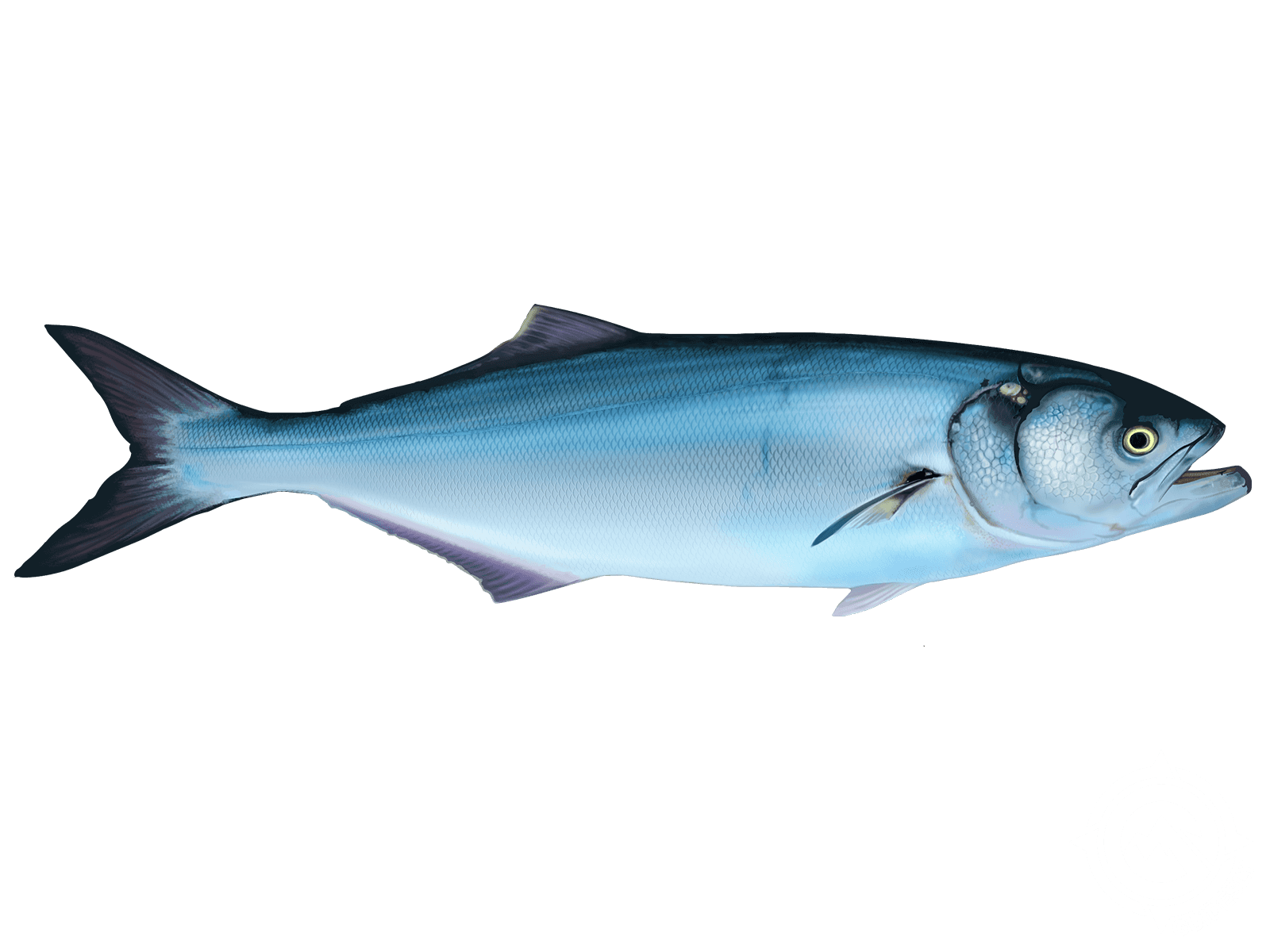
 Bluefish
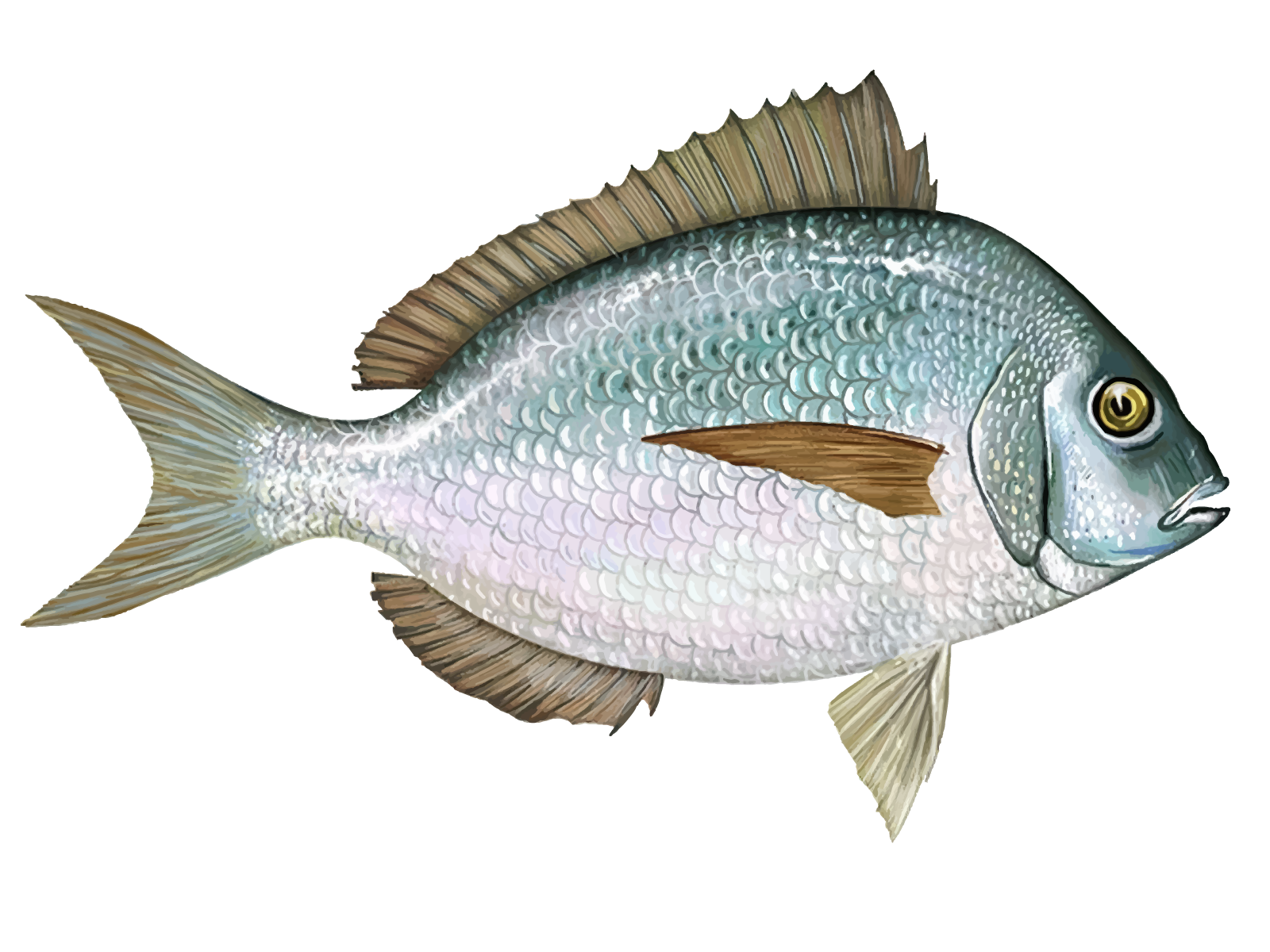 Scup
Scup Spotted Weakfish
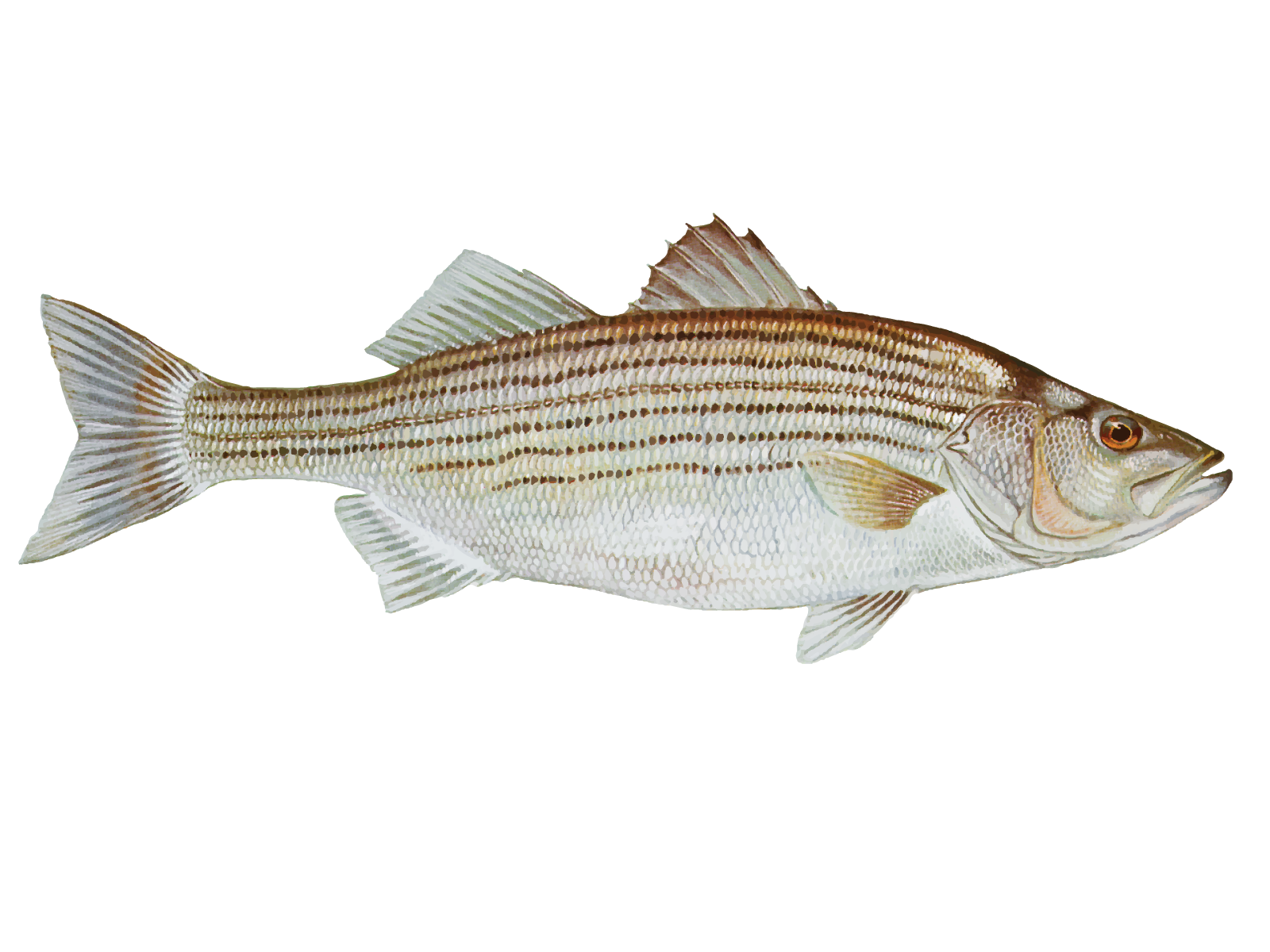 Striped Bass
- 8-hour inshore fishing charter targeting seven species including striped bass
- Complete equipment package provided with expert crew guidance and techniques
- Accommodates up to 3 guests with flexible positioning for optimal catch success
Trip Pricing and Availabilities:
Reel in the Big One: Full Day Long Island Fishing
Get ready to hit the waters of Long Island for a full day of non-stop fishing action! Captain Rick Gulia and the crew at Long Island Light Tackle LLC know these waters like the back of their hand, and they're itching to put you on some monster stripers and hard-fighting blues. This 8-hour inshore charter is perfect for anglers of all skill levels - whether you're a seasoned pro or it's your first time wetting a line. We'll provide everything you need, from top-notch rods and reels to fresh bait, so all you have to focus on is landing that trophy fish.
What to Expect on the Water
As soon as we shove off, you'll feel the excitement in the air. Captain Rick will get us to the hotspots where the fish are biting, using his years of local knowledge to put us right on top of the action. We'll be targeting a mix of popular inshore species including striped bass, fluke, blackfish, weakfish, bluefish, scup, and even false albacore when they're running. The beauty of fishing these Long Island waters is you never know what might end up on the end of your line!
Throughout the day, our experienced crew will be right there with you, offering hands-on guidance and real-time tips to help you improve your technique. We'll show you the local tricks that have been working lately, whether it's jigging for fluke or live-lining bunker for big stripers. And don't worry if you're new to fishing - we love teaching newcomers and watching them reel in their first catch!
Techniques That Land Fish
On this trip, we'll use a variety of inshore fishing techniques to maximize our chances of success. Depending on the conditions and what's biting, we might do some light tackle casting along the shoreline for stripers, or set up a drift to bottom fish for tasty scup and blackfish. If the bluefish are busting bait on the surface, we'll break out the topwater lures for some heart-pounding action.
One of our favorite methods is using live bait to entice the bigger fish. We might snag some bunker (menhaden) and live-line them for trophy striped bass - there's nothing quite like watching your bait get smashed by a 40-pound striper! We also use specialized light tackle setups that let you feel every nibble and really enjoy the fight when you hook up. Captain Rick will walk you through each technique, showing you how to work your lure or bait for the best results.
Top Catches This Season
While every day on the water is different, we've been having an awesome season so far. Anglers have been pulling in hefty striped bass in the 30-40 pound range, with a few monsters pushing 50 pounds. The bluefish action has been red hot, with schools of choppers providing non-stop action on light tackle. We've also been getting into some nice fluke (summer flounder) in the bays, with a few doormat-sized fish over 8 pounds hitting the deck.
Species You'll Want to Hook
Striped Bass: The crown jewel of Long Island inshore fishing, stripers are hard-fighting and delicious. These fish can grow to over 50 pounds, and they love to hang around structure like jetties and bridge pilings. Spring and fall are prime times for big bass, but we catch them all season long. There's nothing quite like the thrill of a big striper crushing a topwater lure at dawn.
Bluefish: If you want non-stop action, bluefish are your ticket. These toothy predators hunt in schools and will attack just about any lure or bait you throw at them. They're known for their aggressive strikes and blistering runs. Bluefish typically show up in May and stick around through October. While they're not the best eating fish, they're a blast to catch on light tackle.
Scup (Porgy): Don't let their small size fool you - scup are fun to catch and excellent table fare. These tasty panfish travel in large schools and are perfect for introducing kids to fishing. We typically target them with small hooks and pieces of clam or squid. Scup fishing is best from late spring through early fall.
Spotted Weakfish: Also known as sea trout, weakfish are a prized catch for both their fight and their flavor. They get their name from their soft mouths, which require a delicate touch when fighting them. Weakfish are most abundant in the spring and fall, and we often catch them while targeting other species. Their purple-spotted sides make them one of the prettiest fish in these waters.
Why Anglers Keep Coming Back
It's not just about the fish - though that's a big part of it! Our customers love the personalized attention they get on our charters. We keep our groups small (max 3 anglers) so everyone gets plenty of individual instruction and time to fish. Captain Rick's easygoing personality and wealth of local knowledge make for a fun, educational day on the water. Plus, there's just something special about being out on Long Island Sound, surrounded by beautiful scenery and wildlife.
Time to Book Your Spot
Ready to experience some of the best inshore fishing Long Island has to offer? Don't wait - our prime dates fill up fast, especially during peak seasons. Whether you're a serious angler looking to tangle with some trophy stripers or a family wanting to introduce the kids to fishing, we've got you covered. Book your full day charter with Long Island Light Tackle LLC now and get ready for a day of rod-bending action you won't soon forget. The fish are biting, and we can't wait to get you out there!
Learn more about the animals
Bluefish
Bluefish (Pomatomus saltatrix) Fish Description
Bluefish is a common game fish that is known for its delicious taste. Bluefish is a warm-water migratory species living in the Atlantic Ocean from Nova Scotia to Argentina and Spain to southern Africa. In South Africa, the Bluefish is known as Shad or Elf; in New Zealand and Australia, it is called Tailor. Bluefish are seasonal visitors to Cape Cod waters, arriving in mid-June and remaining until mid-October. They spend the winter in warmer waters from North Carolina to Florida's tip.
The Bluefish has a moderately proportioned body; one of its distinctive features is its broad and corked tail and its spiny first dorsal and pectoral fins that are usually folded back in a grove. The Bluefish is generally grayish to blue-green in its dorsal area, whereas its belly and lower sides fade to white.
It is a voracious predator with a large mouth and flat, triangular teeth that are strong, sharp, and prominent teeth.
Bluefish Diet
As aggressively strong feeders, the Bluefish have a complex menu of prey. They can chase after schools of forage fish owing to their fast swimming speed. They usually go on a feeding frenzy by attacking these schools of fish even after having satisfied their stomachs. They especially like sardine-like fish, Menhaden, Weakfish, Grunt, Anchovy, Squid, and Shrimp. In return, the Bluefish serve as food for bigger fish like Dolphin, Billfish, Sharks, and Tuna, among others.
Bluefish Size
Commonly, the Bluefish can grow up to 7 inches; they weigh up to 40 lbs. However, most of the Bluefish population reaches only up to 20 lbs.
Interesting Facts About the Bluefish
- The Bluefish is the only remaining living species from the Pomatomidae family. It used to be grouped with Gnomefish, but the latter were separated.
- Lophar miocaenus from Southern California is an extinct relative of the Bluefish from the Late Miocene Period.
- Bluefish are reported to live up to 9 years.
- The Bluefish are cannibalistic, and they sometimes eat their own young.
- The Bluefish are known for churning water like a washing machine, attacking schools in shallow depths. This is called “Bluefish Blitz.”
- Bluefish is a common host to many parasites; in particular, it is often inhabited by the parasite named Philometra saltatrix, which is found in the ovaries of the fish.
- Despite being high in omega-3, children and adult women are warned against consuming Bluefish due to its significant mercury content.
- When properly prepared, bluefish is extremely good to eat, with mild, flaky meat, though larger fish (those weighing more than 10 pounds) have a stronger flavor than their smaller brethren.
Bluefish — Fishing Techniques
To reel in lots of Bluefish, you can use the following harvesting methods: trawls, hook and line, and gillnet. Note that you can only use a circle hook and nothing else; recreational anglers can only capture up to three pieces of Bluefish per day (no minimum size). As for artificial lures or flies, you can use only up to a maximum of two treble hooks. Be careful when handling Bluefish since they can bite you, leading to some serious wounds. Oily fish, such as eels, make excellent bait for bluefish. However, almost any type of baitfish can be used. When learning how to catch bluefish, another option is to use cut bait. Try chunks shaped like a small lure.
You can best fish for Bluefish from tidal rivers, bays, and sandy harbors during summer. In late summer, small, juvenile bluefish known as "baby blues" or "snappers" can be caught in sandy harbors, bays, and tidal rivers. This is an excellent fish for young and inexperienced anglers to catch. Bluefish are frequently caught using gillnets in the commercial bluefish fishery, but they can also be nabbed using a hook, line, or trawl gear.
A permit must be secured to catch Bluefish in commercial fisheries. Some states also impose a specific catch limit for commercial and recreational fishing.
Bluefish Habitat and Distribution
As a marine pelagic fish species, the Bluefish generally inhabit subtropical and temperate waters all around the globe. Most thrive along the continental shelves of America (except in northern South America and south Florida), Australia, and Southeast Asia. Interestingly, the Bluefish is also not found on the north side of the Pacific Ocean.
Typically, anglers find school of Bluefish in various habitats, including brackish waters, estuaries, rock headlands, surf beaches, or above the continental shelf. From time to time, the Bluefish migrate to open waters in schools.
Bluefish fishery management employs a bag limit for recreational fishing and an annual quota distributed to states for commercial fisheries to avoid overfishing.
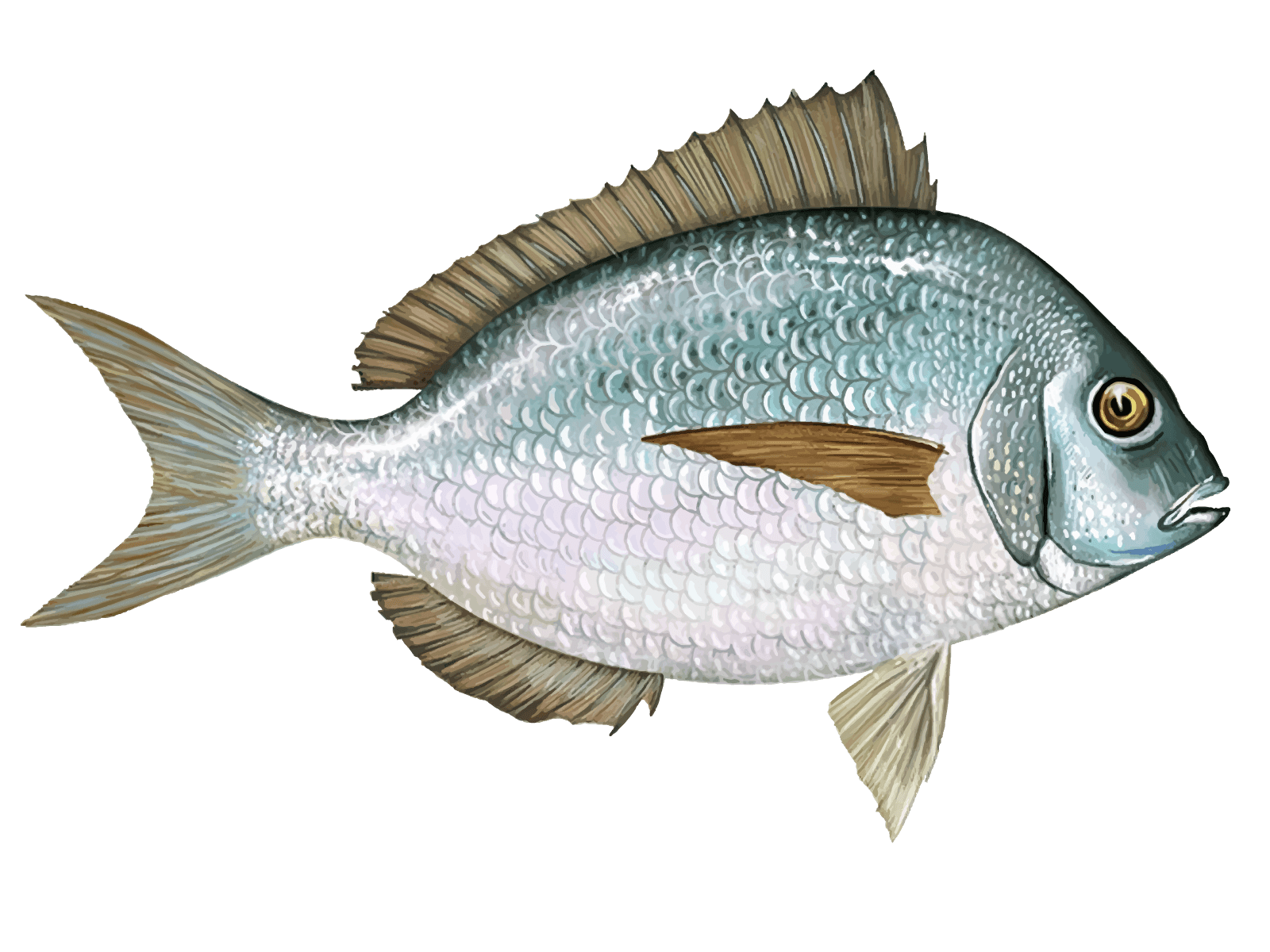
Scup
## Scup Description The scup, also known as porgy, is a medium-sized fish with a tall, compressed body. Scup are brown with iridescent silver scales that can reflect the colors of the rainbow. They have small mouths with strong jaws and narrow, pointed teeth used to crush small shells. Their dorsal fin has a row of sharp spines that make up almost the entire fin length. Scup Size Scup grow up to 18 inches long and 4 pounds. They can live a relatively long time, up to 20 years. ## Scup Habitat Scup are a migratory species of fish. From May to October, with warmer water temperatures, they will be near the coastline and often within a few miles of shore. When winter and cold water temperatures move in, they will travel south and offshore into deeper water. If they get caught in shallow, inshore waters when a cold snap hits, scup will often die. 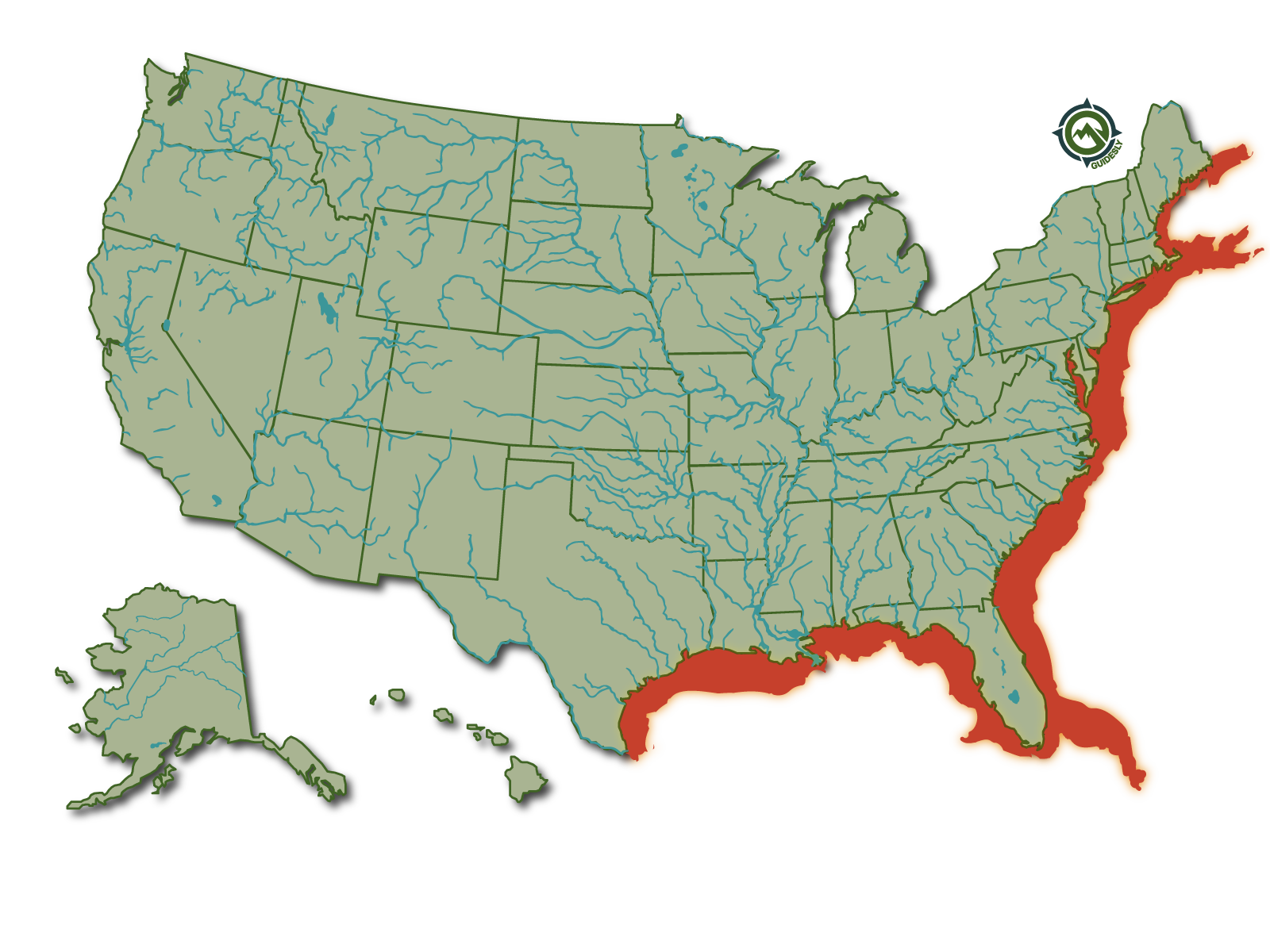 Scup inhabit the Atlantic Ocean off the coast of the United States from Maine to North Carolina. ## Scup Interesting Facts Scup are an important commercial fish, harvested in high numbers each year and commonly exported to Japan. The slow-growing Scup begins to reproduce at the age of 2 years and at the size of around 8 inches long. Scup spawn in weeds or sandy areas in southern New England from Cape Cod, Massachusetts to the New York area from May through August, with peak spawning in June. Scup spawn in the morning, although most other fish species spawn at night. Females release around 7,000 eggs once a year. While not a sport fish per se, scup are good eating fish. They’re also an effective live bait for striped bass and even white marlin. ## Scup Diet Scup are bottom feeders, and you will find them searching for food near rocks and pilings to feed on mollusks, worms, and other invertebrates. They are able to crush the hard shells with their strong jaws and molars. ## Scup Method and Lures Popular methods of catching Scup are drifting, bottom fishing, and jigging. Medium tackle with a 14 lb test line and natural bait like squid, worms, or clam is the most popular with these fish. The recommended scup setup includes a spinning rod and reel combo suitable for 14 lb test line. The optimal rod is 6'6″ to 7′ with fast action and capable of handling lure weights up to 1 ounce. Fused and braided lines allow for much greater casting distance. From the boat, cast the bait to the ocean floor and jig your bait slowly up and down. From the shore, cast out and let the bait sink to the bottom. Reel in until your line is taut. Scup are a very easy fish to catch, most being caught by anglers targeting other fish. Although Scup are considered a bottom species and not a fly fishing angler's target, they are occasionally seen in schools on the surface and can be caught using small clousers and small rain bait flies.
Spotted Weakfish
Spotted Weakfish (Cynoscion nebulosus) Fish Description
The Spotted Weakfish (Cynoscion nebulosus) is a popular gamefish commonly found in the coastal waters of the Gulf of Mexico as well as in the South-eastern United States—from Maryland to Florida. Its popularity as a target by both recreational anglers and commercial fishers is due to its abundance in the said waters, the relative ease to catch the fish, and the excellent flavor of its flesh. Though the fish is also often called spotted seatrout, it is actually not a trout but a member of the drum fish family, which is known for making a croaking or drumming noise.
The Spotted Weakfish can easily be distinguished from other fish species through its compressed elongated body that is speckled with irregular faint spots on the top half. It’s mostly metallic silver in color but the upper half has a dark grayish or bluish tinge and the lower half is tan or white. Its dorsal fin is long and segmented into two parts—with the front part upright and spiny, and the back part leaning to the hind part of the fish. And like all Sciaenids or drumfish, it has a long lateral line that is faint and runs from the head to the tail base.
Diet and Size
Spotted Weakfish are known to be ambush predators wherein they would lunge at their prey who happen to pass by their turf. Their prey mainly consists of fishes and crustaceans, including shrimp, anchovies, pinfish, silverside, mullet, croaker, silver trout, snapper, gobies, sheepshead, grunts, toadfish, and mojarras.
Spotted Weakfish can grow as much as three and a half feet in length and weigh as much as seventeen and a half pounds. The average size, however, tends to be between twelve to sixteen inches in length.
Spotted Weakfish Interesting Facts
- The biggest Spotted Weakfish on record weighs seventeen pounds and seven ounces, measuring thirty-nine inches long.
- The world record Spotted Weakfish was caught by Orlando angler Craig Carson off Fort Pierce Inlet in Florida.
- Their average lifespan is between eight to ten years.
- They have large canine-like teeth that they use to grab unsuspecting prey.
- Their meat is said to have an excellent taste and best cooked by steaming, broiling, or baking.
- They are often found to have “spaghetti worms”, which are actually quite harmless to humans and these can easily be picked out when the fish is filleted.
- Aside from humans, known predators of the fish include striped bass, alligator gar, barracuda, porpoises, and sharks as well as seabirds such as cormorants and pelicans.
- The Spotted Weakfish spawns starting from spring until late summer. It usually spawns at night, with the males announcing their presence by making croaking sounds two hours before sunset. Although it would often stay in the oceanic coastal waters most of its life, it would move to bays and estuaries during spawning season. A single female can produce between 15,000 to 1,100,000 eggs per spawning and the eggs would hatch in just about eighteen hours after fertilization. The young spotted weakfish would form small schools of about fifty individuals per school and would stick together until they reach juvenile stage, in which they would head to their natural habitat of seagrass beds, sandy bottoms, muddy bottoms, and reefs.
Fishing Tips
Spotted Weakfish can easily be caught via fly-fishing as the fish is known to attack colorful lures, especially when they’re in hunting mode. They also tend to hunt from the bottom to the surface of the water so you wouldn’t really need to add weight to your lure as they’ll just try to get to your bait once they spot it. The best way to attract the fish to your area is to make it look like you’re your bait is just swimming casually near the water surface and the best way to do this is by retrieving slowly. But as soon as you see the fish approaching, reel in a little bit faster to make it seem like your lure is a fleeing fish and the Spotted Weakfish will try to strike faster and harder, thus, the hook will set to the fish’s mouth much deeper. You need to do this since the fish’s mouth is known to be soft, making it easy for hooks to pull loose, especially if the hook is not embedded in the mouth tightly.
Habitat and Distribution
The Spotted Weakfish is endemic in the Western Atlantic Ocean, particularly from Massachusetts to South Florida; as well as within the inlets and estuaries along the country’s Atlantic seaboard. They can also be found within the entire Gulf of Mexico.
As a demersal fish, the Spotted Weakfish prefers to swim on or near the ocean floor, although they are found swimming near the surface when they’re hunting—which is actually quite often. The fish likes to hunt in shallow coastal and estuarine—in both salt and brackish—waters over sandy bottoms and seagrass with depths of up to thirty-three feet. They also tend to move closer to the shores and the shallower parts of the water during warm summer months and will only move to deeper parts of the ocean when it gets colder.
Striped Bass
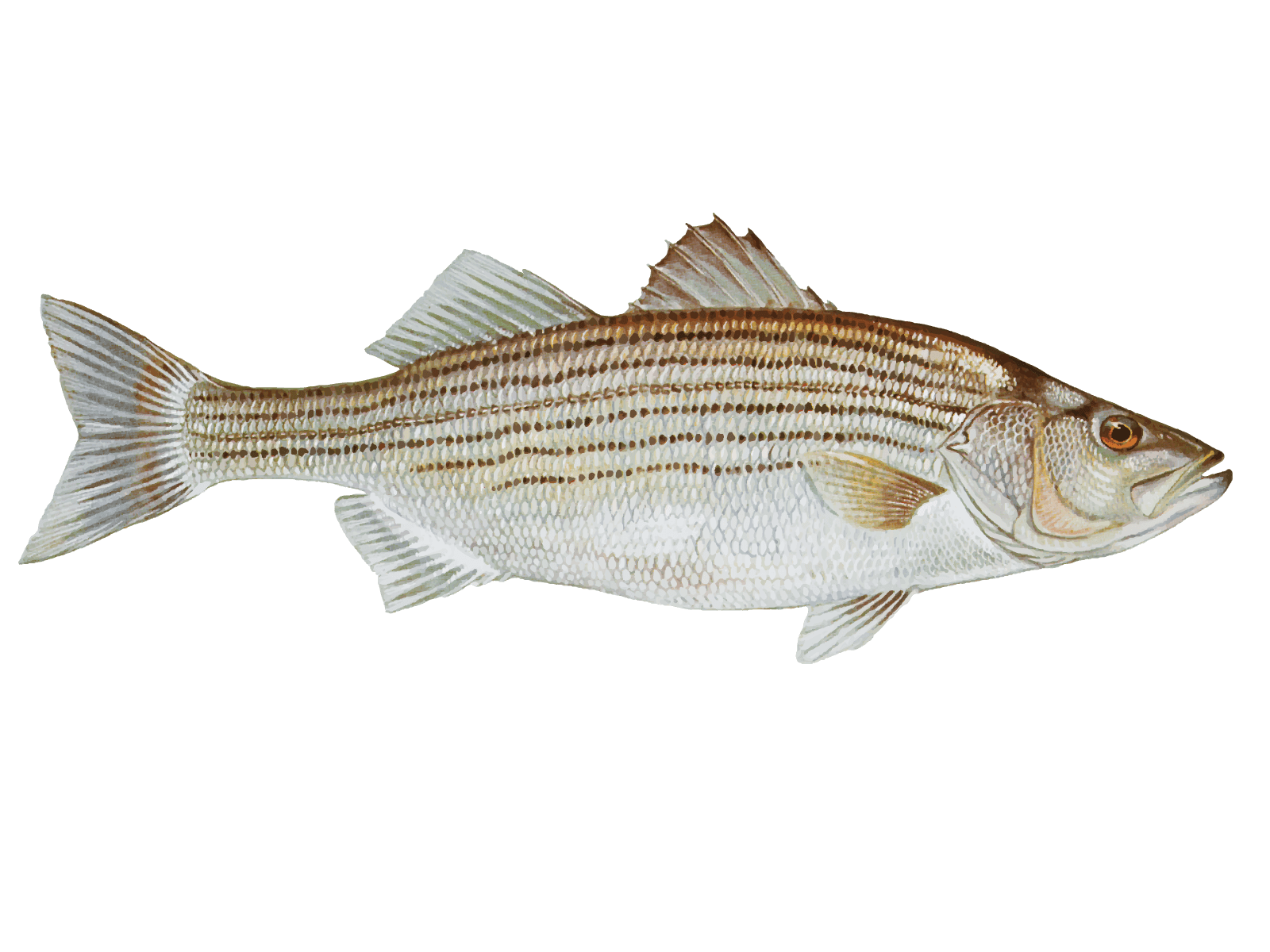
Striped Bass (Morone Saxatilis) Description
The Striped Bass (Morone saxatilis), or Atlantic Striped Bass, Stripers, or Linesider, is a popular game fish for recreational and commercial fishers. As the name suggests, it has seven to eight stripes running down the sides of its body; its color can vary from light green and olive to brown and black. It also has a shimmering white belly and plump bodies that can grow as heavy as 70 pounds and as long as 5 feet, making it easily distinguishable from other species.
Although this fish mostly lives in saltwater during its adult life, it’s anadromous as it spawns (and is even known to adapt well) in a freshwater environment.
It can naturally be found along the East Coast (from as far north as Canada to down south in the Gulf of Mexico). However, you can find it in most water bodies in North America as the species was introduced across the continent for recreational fishing and for controlling the gizzard shad population, which the Striped Bass is known to prey upon.
Interesting Facts
Striped Bass spawn in freshwater and many of the Stripers become landlocked because of dams and other human-made obstructions; but, as earlier mentioned, they adapt well and can thrive in a freshwater habitat.
If you’re fishing for food, the Striped Bass is excellent for eating not only for its plump and meaty body but also for its exquisite, sweet taste, similar to its close relative, the Black Sea Bass.
Striped Bass Size and Speed
For those of you who are planning to fish for this species, yes, they are known to be powerful swimmers, but they’re not particularly fast, making them reasonably easy to catch. Although they can grow much bigger, most caught weigh around twenty to forty pounds.
Where do Striped Bass Live?

You can fish for Striped Bass pretty much any time of the year and can find them in nearly every body of water in the United States. It’s also worth noting that the Chesapeake Bay, Maryland is the major producer while the Hudson River in New York and New Jersey is the second.
However, if you’re on the West Coast, you may want to try your luck in the San Francisco Bay and the surrounding coastline. Colorado rivers and lakes such as Lake Havasu, Lake Mead, Lake Powell, Lake Pleasant, and Lake Mohave are also known to have a great abundance of Striped Bass.
Striped Bass is a structure-oriented fish meaning they can be found around physical structures such as coral reefs, sand bars, and drop-offs. They stay at the bottom of the ocean along the shores as it looks for food. And because they love to swim in moving waters, you can most locate Stripers within yards of the shorelines.
Striped Bass Migration
One of the most exciting aspects of striped bass is their annual migration patterns. These fish are known to migrate long distances, sometimes thousands of miles, which makes them a fascinating subject for study. Striped bass prefers moderate temperatures between 55° F and 68° F. To stay within this temperature range, most striped bass migrate up and down the Atlantic coast from spring to fall.
Scientists have been studying striped bass migration for many years, and they have discovered that these fish travel from estuaries to the open ocean and back again each year. Striped bass can migrate up to 2,000 miles during their lifetime! They typically move northward in the spring and summer months when water temperatures warm up, then head south towards warmer waters in the fall.

The spring striped bass migration begins from the deeper waters off the Virginia and North Carolina coasts. In the spring, the stripers start their northern migration stopping to spawn in the rivers, estuaries, and bays such as the Delaware River, the Hudson River, and the Chesapeake Bay. The Stripers continue north and eventually spend their summers in the cool waters in New England, and sometimes further North to Canada.
The striper migration bait typically begins in the fall as the water cools. If you want to experience this unique opportunity, you'll want to head for one of the most amazing events that an angler can experience. Striper bait, including pogies, peanut bunker, and silversides, will come out of bays and into the ocean early. The hungry stripers want to fatten up for the cold season as winter approaches, so they're actively searching out prey. Stripers seek out the enhanced bait pods that create feeding frenzies. Look for baitfish volcanoes erupting from the water or birds signaling the wounded baitfish. If you are truly fortunate, you will see whales coming from below the baitfish volcano. Fall migration continues all the way until December around the New Jersey coast and parts of January in the Virginia region.
Check out this detailed Striped Bass Migration article.
Is Striped Bass Good to Eat?
Striped bass, also known as "striper," is a popular saltwater fish that can be found along the Atlantic coast of North America. Many people wonder if striped bass is good to eat, and the answer is yes! Striped bass is not only delicious but also packed with nutrients that can benefit your health.
One of the benefits of eating striped bass is its high omega-3 content. Omega-3s are essential fatty acids that help reduce inflammation in the body, improve brain function, and even lower your risk of heart disease. Striper meat contains about 0.5 grams of omega-3s per 100 grams, making it an excellent nutrient source. Additionally, striped bass is rich in protein - a crucial component for building and repairing tissues in your body. A serving size of just 100 grams provides approximately 20 grams of protein.
Fishing Techniques - How to Catch Striped Bass
Striped Bass can be caught year-round and in almost any condition; you can, however, increase your chances if you know exactly what, when, where, and how to look. Stripers are known to swim around and feed in moving waters, near structures along the shores, and you will find them where the water is cooler near the surface during dusk and dawn. Cast your lines out early or late in the day from bridges, piers, bulkheads, or even while wading in the surf.
Choosing the Right Bait
Striped Bass are mostly finicky predators being picky about the baits they will take. It’s best to use live baits such as herring, menhaden, mackerel, eels, squid, anchovies, bloodworms, or shad as it will help attract them with the live bait’s movement.
Choosing the Right Equipment
Although you can use almost any rod and reel for Striped Bass fishing, you can be more successful using rods that are 8 to 14 feet in length, especially for fly fishing. You should use a thinner and more sensitive yet stronger line with little stretch like a braided line. If you prefer using the monofilament type, make sure that it’s strong enough to withstand up to 20 pounds of weight as these fish are not only big, heavy fish, but also strong fighters.
Find fishing tips, techniques, and the best destinations for Striped Bass Fishing
Why are Striped Bass Called Striper?
Striped bass, or Morone saxatilis, is a popular game fish native to the Atlantic coast of North America. It is widely known as "striper," which begs the question: Why do they call striped bass striper? The answer to this question lies in the distinct markings on the fish's body.
The name "striped bass" comes from its characteristic stripes running along its sides. These stripes are typically seven to eight in number and run from just behind the gills to the base of the tail. When viewed from afar, these stripes can appear like bars or lines that make up a striped pattern on their silver-green skin.
Given that this species has such distinctive vertical stripes, it makes sense why they are called stripers. The name has become so widely used among anglers and fishing enthusiasts that it is now more common than calling them by their scientific name.
What is the Hybrid Striped Bass?
Hybrid striped bass is a popular fish species among anglers and seafood enthusiasts. As the name suggests, it's a crossbreed between two different types of bass: striped and white. The hybridization process has resulted in a fish with desirable traits such as rapid growth, aggressiveness, and resistance to diseases and parasites.
Hybrid striped bass can grow up to 30 inches in length and weigh as much as 15 pounds. They have streamlined bodies with dark stripes running along their sides, which give them an attractive appearance. Moreover, these fish are known for their delicious taste and versatility in cooking methods.
Due to its popularity, hybrid striped bass is widely farmed across several regions in the United States. It's commonly used by chefs in various dishes such as sushi rolls, grilled fillets, or stews.
Striped Bass Population
The wild striped bass population is an essential aspect of marine fisheries conservation efforts. Striped bass are a popular game fish that attract recreational anglers from all over the world. Stripers also play an essential role in the natural resources ecosystem in the Atlantic Ocean and the many tributaries like Delaware Bay, Delaware River, Hudson River, and many coastal rivers. Striped bass are a top predator in many coastal habitats, feeding on smaller fish and crustaceans.
Unfortunately, the striped bass population has been under pressure for several decades due to overfishing and habitat loss. One of the primary conservation efforts underway is the implementation of regulations aimed at protecting striped bass populations from overfishing. This includes restrictions on fishing methods and gear, as well as limitations on catch limits for both recreational and commercial fishermen. Additionally, many states have implemented size limits for the fish that can be caught to allow younger fish to reach their reproductive age.
Despite these efforts, the future of the striped bass population remains uncertain. Climate change is causing significant shifts in ocean temperatures and currents that could impact the availability of prey species for striped bass.
A Few Striped Bass Resources:
-Striped Bass Migration, article tracking the Striped Bass Atlantic Coast migration
-Striped Bass Lures, expert guides weigh in with the best striped bass lures
-Striped Bass Bait, top 10 striped bass baits
-Striped Bass Cape Cod, expert guide talks about catching striped bass on Cape Cod
-Striped Bass Chesapeake Bay, expert guides talk about catching striped bass on Chesapeake Bay

About the 23’ Center Console
%2F%2Fusers%2F566ec949-39ef-4631-8919-721b0ba6d3e0%2Fvehicle_picture%2Fimage13.png&w=1920&q=75)
Vehicle Guest Capacity: 4
Manufacturer Name: Suzuki
Maximum Cruising Speed: 38
Number of Engines: 1
Horsepower per Engine: 250